One of the earliest decisions in a dock project is whether the main platform should be covered, open, or some combination of both. It sounds like a style choice, but it is really a question about how you use the water. Shade, boarding access, wind, and the way you move between a boat lift, a seating area, and the shore all change the right answer, and a good comparison weighs each one honestly.
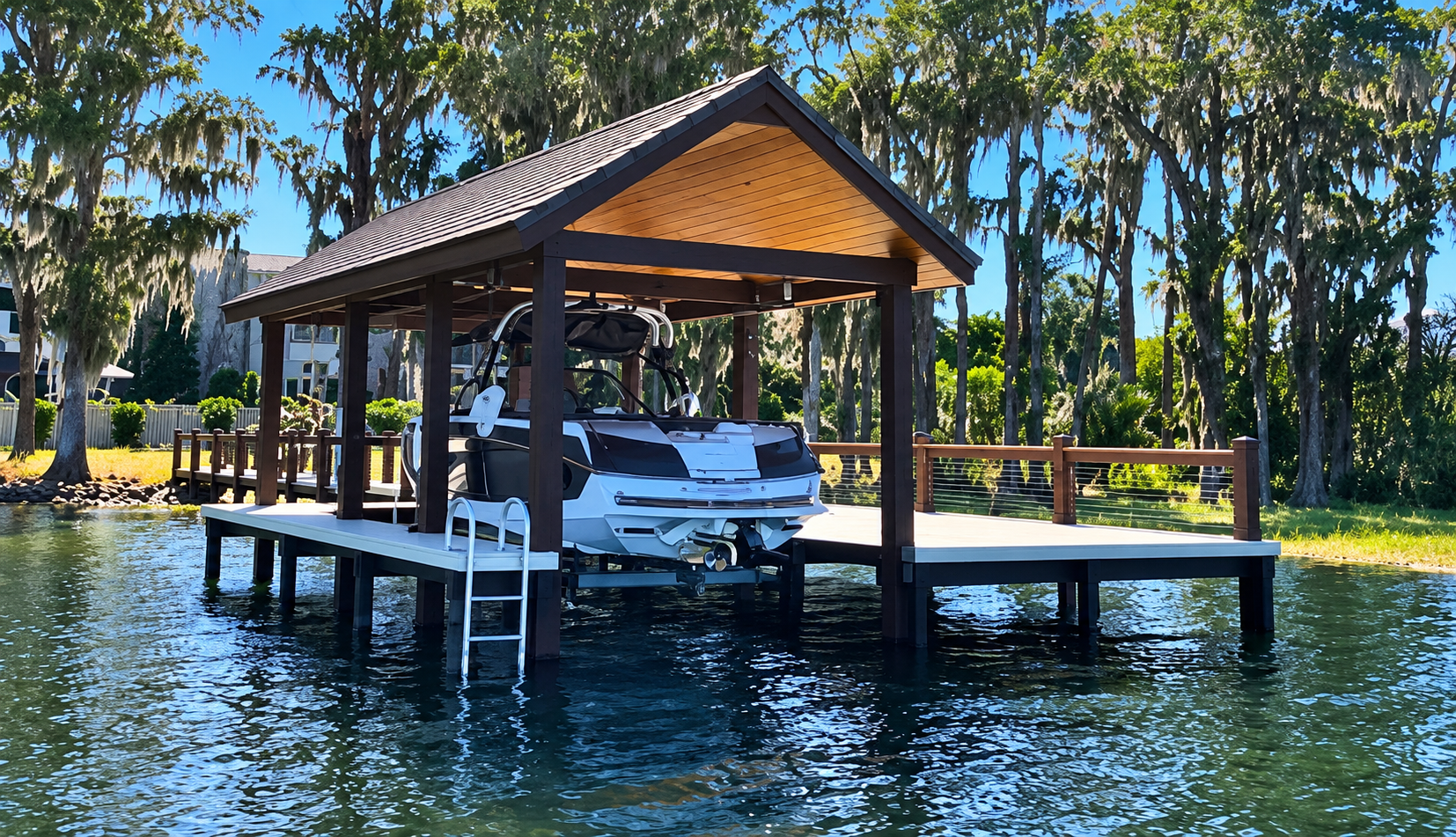
A covered dock area gives you shade, which matters more in Central Florida than almost anywhere else. The sun on a deck surface can make barefoot walking uncomfortable, and a roof keeps the decking cooler, protects furniture, and gives you a place to sit out of direct sun. A roof also keeps rain off the boarding area, so you are not stepping onto a wet, slick surface after a storm. For homeowners who use the dock as an extension of their yard for sitting, reading, or entertaining, a covered section tends to pay off.
The tradeoffs of a covered dock are real. A roof adds height, which can affect sightlines from the house and can change what a homeowners association or permitting authority allows. A roof also adds wind load, which is a serious consideration in a region that sees thunderstorms and the occasional tropical system. The framing has to be engineered to carry that load, and the pilings have to resist the lateral force a roof creates in a storm. None of this is a reason to avoid a roof, but it is a reason to design one for the actual conditions, not just for the look.
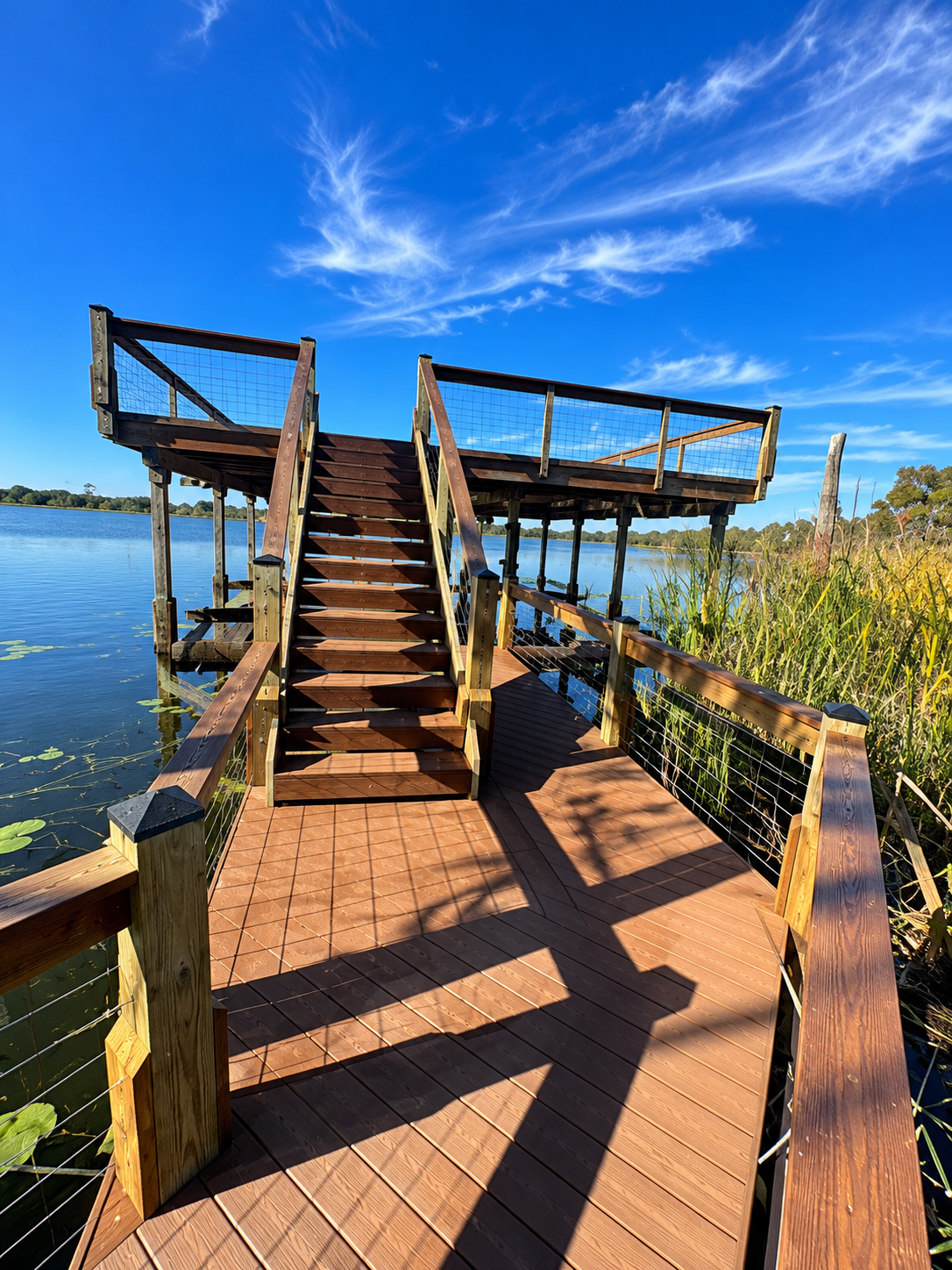
An open dock area keeps everything simple. No roof means lower wind load, lower height, and an unobstructed view. It also means a lower cost and an easier permitting conversation in most cases. For homeowners whose main use is boarding a boat and getting out on the water, an open platform is often the practical choice. The surface gets wet in the rain and hot in the sun, but it is also the most flexible space, because nothing is in the way.
The most common solution is a hybrid. A covered section at the seating or lift end, and an open boarding area at the water end, gives you shade where you sit and an open path where you move. That layout works well because it puts the structural cost of the roof where it does the most good and keeps the wind-exposed end as low as possible. A boat lift canopy often sits under the covered end, which protects both the boat and the lift hardware.
How you use the water should drive the choice. If you keep a boat on a lift and board every weekend, the boarding area wants to be open and low. If you host, grill, or read on the dock, a covered seating area earns its cost. If you do both, a hybrid layout is usually the right answer, and the proportions of covered to open can be tuned to your routine and your shoreline.
Wind and exposure matter more than people expect. A dock on an open lake sees more wind than one in a protected canal, and that changes how much roof makes sense. A roof that is fine on a sheltered shoreline may need heavier framing on an open one. Your builder can tell you what your waterway and orientation mean for the structure, which is why a site assessment comes before a final layout.
The material choices interact with the covered-or-open decision too. A roof shades the decking, so a surface that runs hot in full sun stays cooler under cover. An open dock in full sun benefits from a composite or a finish that resists fading and heat, and from a non-slip surface that still grips when wet. Picking the decking and the roof together, rather than separately, is how you avoid a dock that looks right but is uncomfortable to use.
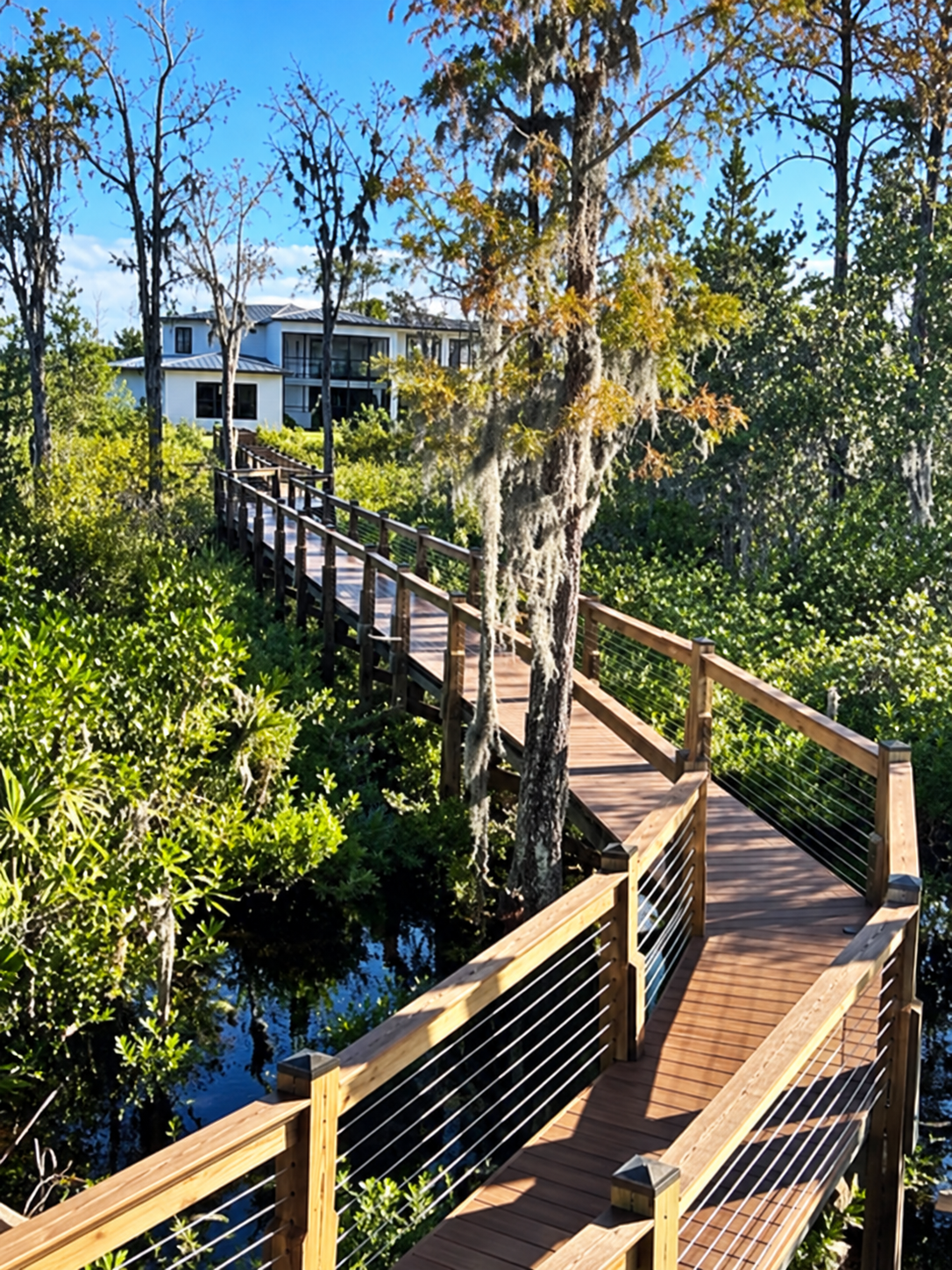
Access and layout are the practical half of the decision. A covered section that blocks the easiest path from the house to the boarding area becomes an obstacle. A covered section that shelters the path and the seating and still leaves a clear boarding run is an asset. The layout has to respect how you carry gear, how you board, and how you move between the lift, the dock, and the yard.
If you are comparing covered and open options, the useful exercise is to describe a typical day on the dock and see which layout serves it. A builder can then turn that description into a plan, a material list, and a realistic cost. The right answer is the one that fits your waterway, your routine, and your shoreline, not a default that looks the same on every property.
Ready to talk about your waterfront? We assess your shoreline, your watercraft, and how you use the water, then give you an honest, accurate estimate — no obligation.
Frequently Asked Questions
- Is a covered dock better than an open dock?
- It depends on how you use the water. A covered area gives shade and keeps the boarding surface dry, which matters for seating and entertaining. An open area is lower cost, lower wind load, and more flexible for boarding. Many docks combine both.
- Does a dock roof add wind load?
- Yes. A roof adds height and surface area, which means more lateral force in wind. In Central Florida, that requires framing and pilings engineered for the actual exposure, especially on open shorelines.
- Can I cover just part of the dock?
- Yes, and that is a common solution. A covered section over the seating or lift end, with an open boarding area at the water end, puts the roof where it helps most and keeps the wind-exposed end low.
- Does a roof affect permitting?
- It can. A roof adds height, which may affect what a homeowners association or permitting authority allows. The requirements depend on your location, waterway, and scope, so we walk through what to expect for your specific site.
- How do I choose between covered and open?
- Describe a typical day on the dock. If you sit, grill, or entertain, a covered section earns its cost. If you mainly board a boat and get out on the water, an open platform is often the practical choice. A builder turns that description into a real layout.