The decking is the part of a dock that gets the wear, but the details are the part that makes it safe and comfortable to use. Railings, lighting, and the finish are the upgrades that refresh an aging dock without the cost of a full rebuild, and they are also the upgrades that most change how the dock feels to use. A dock with new decking but loose railings and no lighting is still a dock that needs work, just in a different way.
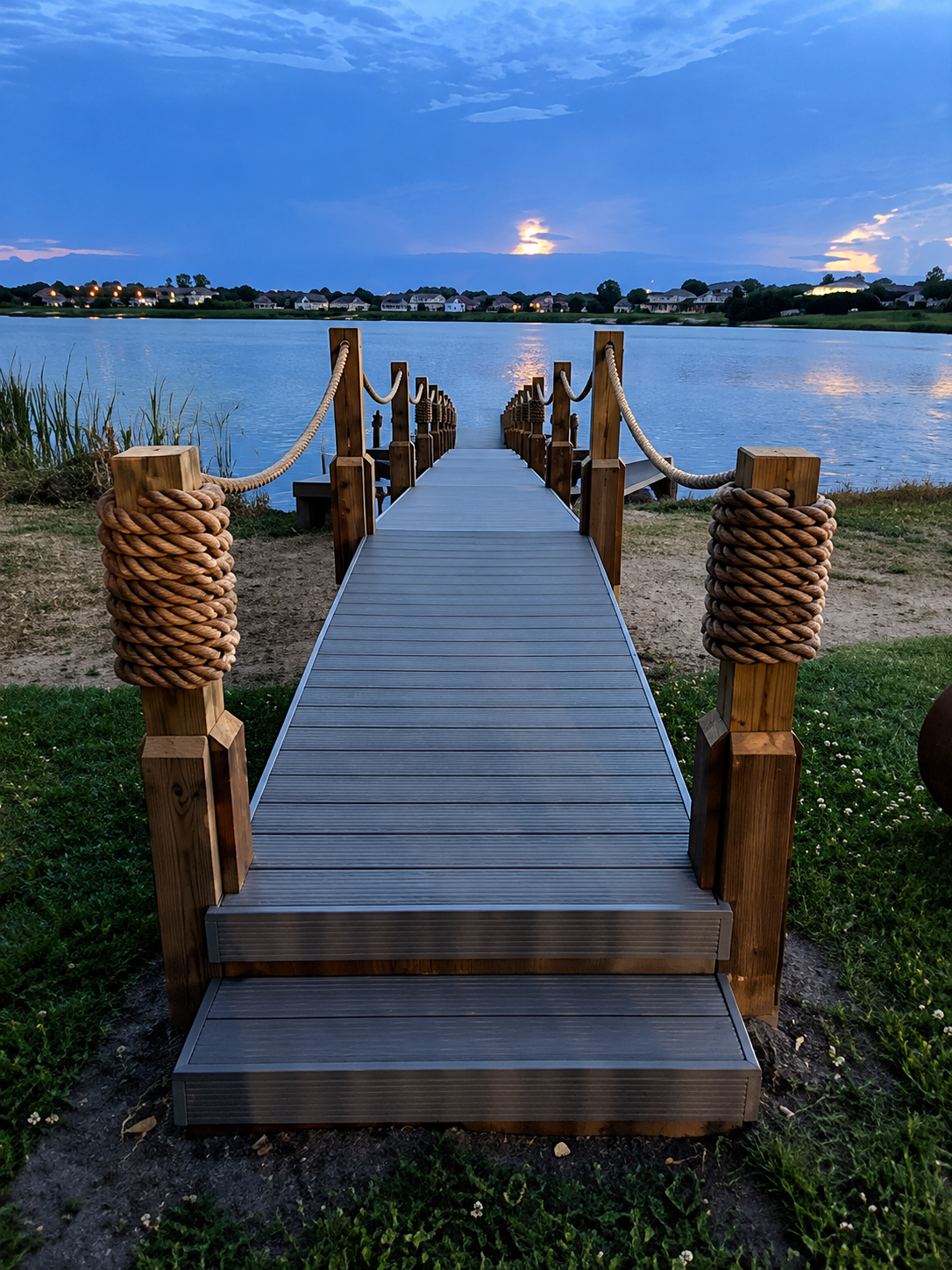
Railings are the first safety upgrade and the one that most often needs attention on an aging dock. A railing that has loosened at the posts, that has corroded at the hardware, or that has lost its grip on the framing is a railing that is not doing its job. On a dock used by children, by guests who are not steady on their feet, or at night, a loose railing is a real hazard. Replacing the posts, the hardware, and the railing material restores the safety the railing was there to provide.
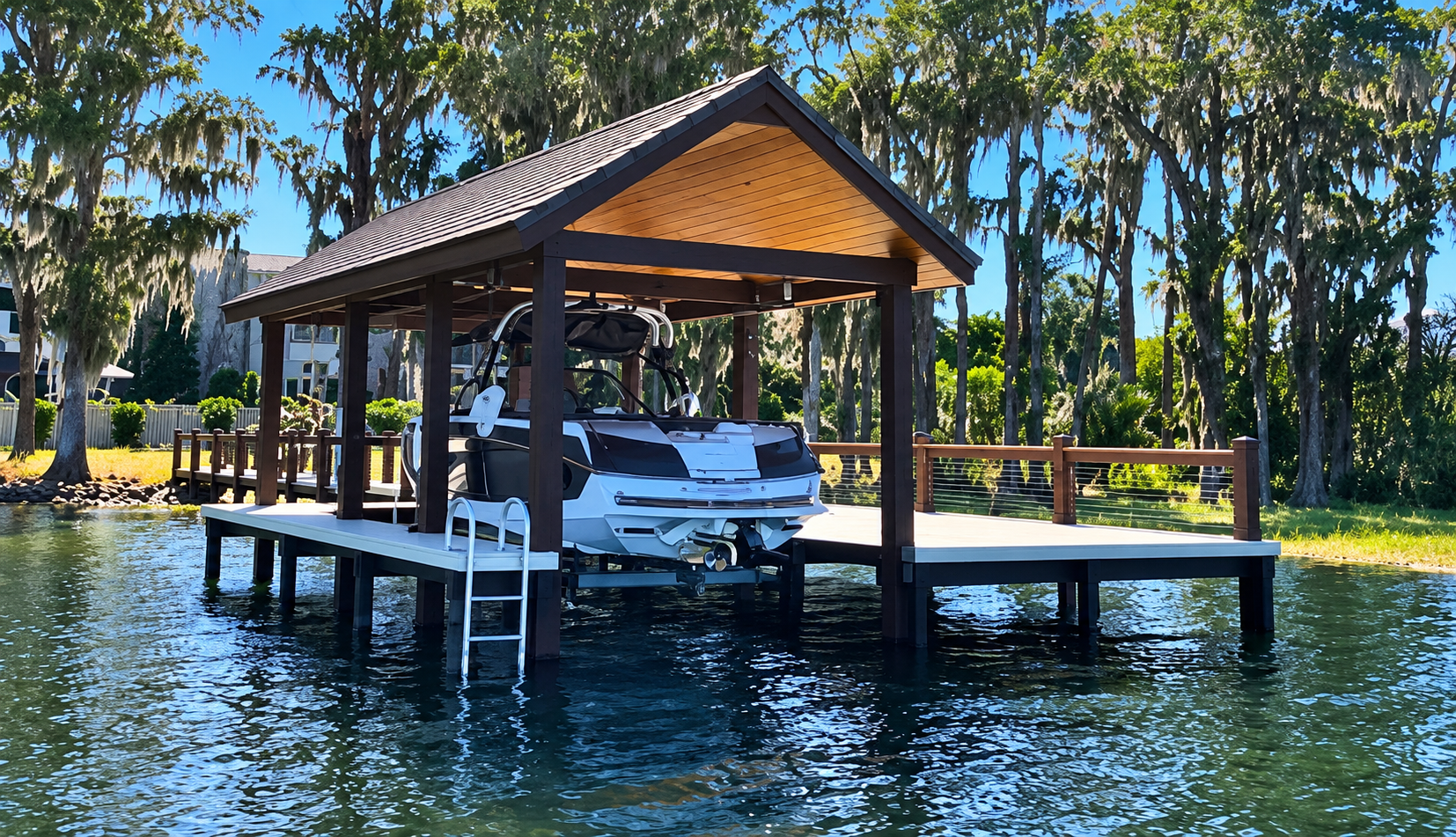
The material of the railing is part of the upgrade. Wood railings are the traditional choice and they can match a wood dock, but they require the same sealing and upkeep as wood decking. Composite or metal railings are lower-maintenance options, and they can change the look of the dock as well as its upkeep. The choice is not just about the material, it is about how the railing fits the dock and how much maintenance you want to do over its life.
The height and layout of the railing matter too. A railing that is too low does not provide the safety it should, and a railing that is in the wrong place can block the boarding path or the view from the seating area. A railing upgrade is the moment to put the railing where it protects the fall risk without getting in the way of the dock's use. A builder can help you place the railing so it serves safety without becoming an obstacle.
Lighting is the other upgrade that changes how a dock is used. A dock with no lighting is a dock that is hard to use after dark, and a dock with lighting is a dock that extends the day. The options range from low-level pathway lighting that marks the walkway to overhead lighting that illuminates a seating area to underwater lighting that lights the water around the dock. Each serves a different use, and the right choice depends on how you use the dock after sunset.
Low-level pathway lighting is the safety baseline. Lights that mark the edge of the walkway, the steps, and the boarding area make the dock navigable after dark without flooding the area with light. Solar options are available that do not require wiring, which can simplify the install, and low-voltage wired lighting offers more control and reliability. The choice is about how much light you want, where you want it, and whether you want to avoid wiring.
Overhead lighting serves the seating and entertaining use. A covered section or a seating area with overhead light extends the usable evening and makes the dock a place to gather after dark. This is usually a wired lighting project, which means it is planned with the dock's electrical and the local requirements in mind. A builder can help you choose fixtures that suit the dock and the exposure.
The finish is the third part of the upgrade, and it is the one that protects the investment. A wood dock that is resealed gets a refreshed color and a new layer of protection against the sun and moisture that Florida weather brings. A composite or PVC dock that is cleaned and maintained keeps its appearance and its surface properties. The finish is not just cosmetic, it is the maintenance that keeps the new railings and lighting sitting on a surface that is still in good shape.
A railing, lighting, and finish upgrade is the project that makes an aging dock feel finished again. The decking may still have life, or it may have been recently replaced, but the details are what make the dock safe, comfortable, and usable. The cost is lower than a full rebuild, and the result is a dock that feels new without the disruption of taking the structure out.
The way to approach the upgrade is to walk the dock and note what feels loose, what is hard to see at night, and what looks tired. A builder can assess the railings, recommend lighting that fits the use, and refresh the finish, leaving you with a dock that is safer and more comfortable to use. The details are what turn a platform into a place worth spending time on.
Ready to talk about your waterfront? We assess your shoreline, your watercraft, and how you use the water, then give you an honest, accurate estimate — no obligation.
Frequently Asked Questions
- When do dock railings need replacing?
- A railing that has loosened at the posts, corroded at the hardware, or lost its grip on the framing is not doing its job. On a dock used by children, guests who are not steady on their feet, or at night, a loose railing is a real hazard and should be replaced.
- Should I use wood or composite railings?
- Wood railings match a wood dock but require the same sealing and upkeep as wood decking. Composite or metal railings are lower-maintenance options. The choice is about how the railing fits the dock and how much maintenance you want to do over its life.
- What kind of lighting does a dock need?
- Low-level pathway lighting that marks the walkway, steps, and boarding area is the safety baseline. Overhead lighting serves a seating or entertaining area. Solar options avoid wiring; low-voltage wired lighting offers more control and reliability.
- Does dock lighting require wiring?
- Not always. Solar pathway lights do not require wiring, which can simplify the install. Overhead lighting for a seating area is usually a wired project, planned with the dock's electrical and the local requirements in mind.
- What does a finish upgrade do?
- A finish upgrade reseals or refreshes the surface. For wood, it restores color and adds protection against sun and moisture. For composite or PVC, it is cleaning and maintenance that keeps the surface looking fresh and performing as it should.