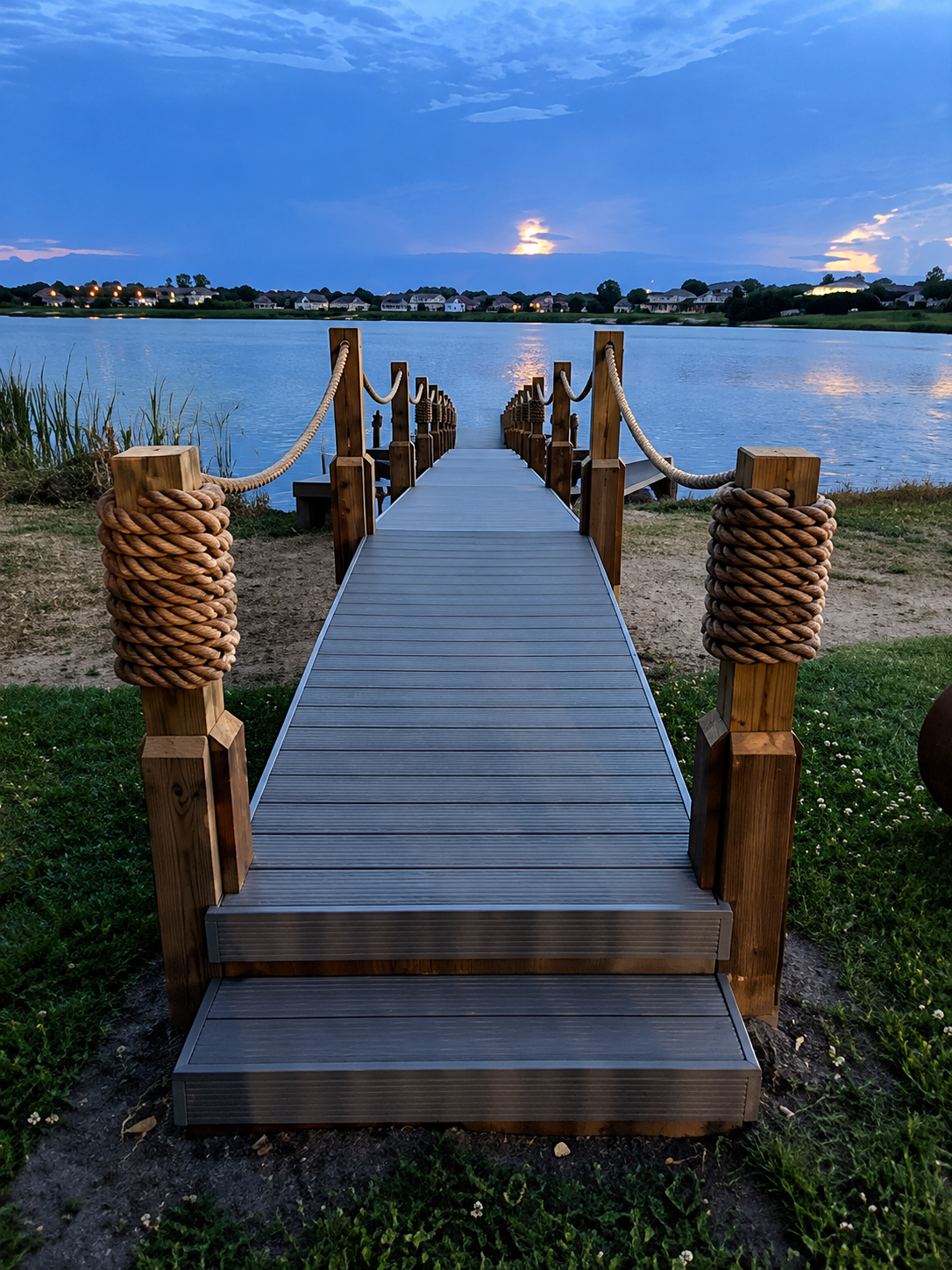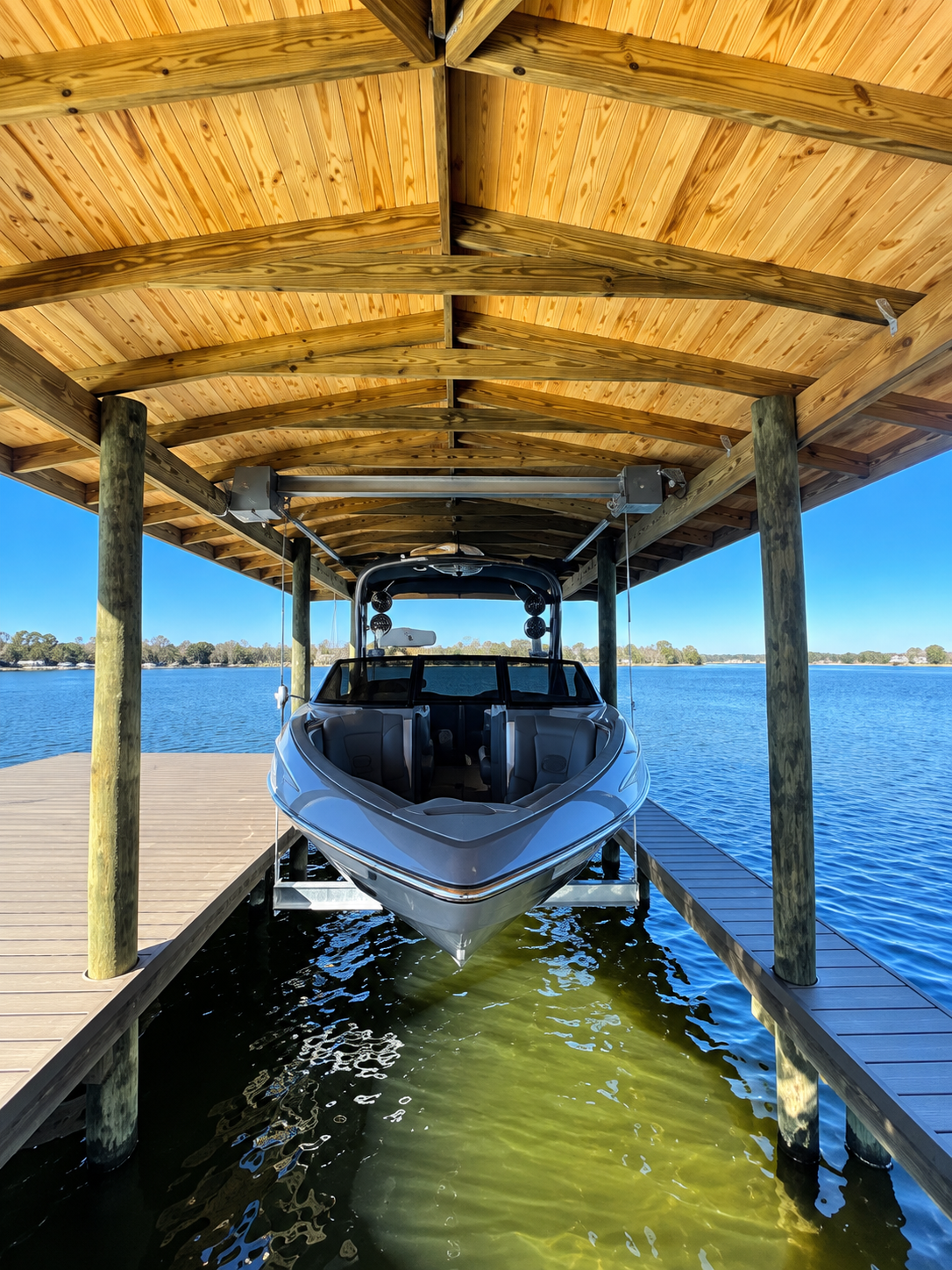
The color and finish of a dock decking are not just style choices, they are performance choices that affect how the dock feels underfoot, how it holds up in the sun, and how much upkeep it takes to keep it looking good. In Florida, where a dock surface can spend hours in direct sun and then get soaked by an afternoon storm, the color and finish decisions matter as much as the material decision.
Color is the first decision, and it has a direct effect on surface temperature. A dark surface absorbs more sunlight than a light surface, which means a dark deck runs hotter underfoot in the middle of a Florida afternoon. On a dock used for boarding, where you may step onto it barefoot from a boat, a hot surface is not just uncomfortable, it is a reason to avoid the dock at the hottest part of the day. A lighter color reflects more sunlight and stays cooler, which makes the dock more usable more hours of the day.
The heat difference is not subtle. A dark composite in direct summer sun can be uncomfortable to walk on barefoot, where a light-colored version of the same material can be tolerable. This is not a reason to avoid a dark color if that is the look you want, but it is a reason to know what you are choosing. A dock that is used mainly in the evening or under cover can handle a darker surface; a dock that is used in full midday sun benefits from a lighter one.
The finish affects both heat and grip. A smooth finish reflects more light and feels cooler, but it can be more slippery when wet, which on a dock is a real safety concern. A textured finish grips better when wet, which is a safety feature, but it can hold dirt and can run slightly warmer because the texture breaks up the reflective surface. The finish is a balance between comfort and safety, and on a dock, where the surface is often wet, the grip usually matters more than the small difference in temperature.
The material interacts with the color and finish in ways that are not always obvious. A wood deck can be stained or sealed to change its color, and the finish can be refreshed over time, which means the color is not a permanent decision. A composite or PVC deck is factory-finished, which means the color is set at installation, and a dark color is a commitment to a hotter surface for the life of the boards. The ability to refinish is a point in wood's favor, and the factory finish is a point in the synthetic materials' favor for consistency.
Maintenance is the other side of the color and finish choice. A light color shows dirt and algae more readily than a dark color, which means a light deck may need more frequent cleaning to keep it looking fresh. A dark color hides dirt but shows dust and pollen, which are a constant in Florida. A smooth finish is easier to clean but shows wear; a textured finish hides wear but takes more effort to clean. The upkeep routine follows from the color and finish you choose, not just the material.
Fading is the long-term consideration. Sun bleaches surfaces over time, and a color that looks rich at installation may fade after years of Florida sun. Wood fades and can be re-stained to refresh the color. Composite and PVC fade too, and the degree depends on the product and the exposure. A capped product resists fading better than an uncapped one, and a lighter color shows fading less than a dark one. The fading behavior is something to ask about when you choose a product, because it affects how the deck looks in five years, not just on day one.
The way to choose a color and finish is to think about how you use the dock and when. A dock used in the heat of the day wants a lighter, cooler surface. A dock used mainly in the evening can handle a darker one. A dock that gets wet wants a finish that grips. A dock that is used hard wants a finish that hides wear. The color and finish are not separate from the material, they are part of the same decision, and the right combination is the one that fits the use, not just the look.
A builder who has installed the material on Florida waterways can tell you how a specific color and finish perform in the sun and wet that your dock will see. The best choice is the one that balances the look you want against the performance you need, and the maintenance you are willing to do. The color and finish are the surface you live on, and they are worth as much thought as the material underneath them.
Ready to talk about your waterfront? We assess your shoreline, your watercraft, and how you use the water, then give you an honest, accurate estimate — no obligation.
Frequently Asked Questions
- Does the color of dock decking affect how hot it gets?
- Yes. A dark surface absorbs more sunlight and runs hotter underfoot, while a light color reflects more sunlight and stays cooler. On a dock used barefoot in the Florida sun, a lighter color is more comfortable in the middle of the day.
- Should I choose a smooth or textured deck finish?
- A smooth finish feels cooler and is easier to clean but can be slippery when wet. A textured finish grips better when wet, which is a safety feature on a dock, but it can hold dirt and run slightly warmer. On a wet surface, grip usually matters more.
- Do light or dark decks show dirt more?
- A light color shows dirt and algae more readily, so it may need more frequent cleaning. A dark color hides dirt but shows dust and pollen. The upkeep routine follows from the color you choose, not just the material.
- Will my dock decking fade in the Florida sun?
- Sun bleaches surfaces over time. Wood fades and can be re-stained to refresh the color. Composite and PVC fade too, and the degree depends on the product and exposure. A capped product resists fading better than an uncapped one, and a lighter color shows fading less.
- Can I change the color of my wood dock later?
- Yes. Wood decking can be stained or sealed to change or refresh its color, so the color is not permanent. Composite and PVC are factory-finished, so their color is set at installation. The ability to refinish is a point in wood's favor.