A few hours of preparation before a storm can save a season of repairs afterward, and on a Florida waterfront, the storm is not a question of if but when. The dock, the boat lift, and the accessories are all exposed to the wind and the water that a storm brings, and the preparation is the way to reduce the damage the storm can do. The preparation is not about making the dock storm-proof, it is about reducing the risk that the storm turns into a major repair.
The first step is to secure the boat. A boat that is left on a lift during a storm is a boat that is exposed to the wind and the surge, and a boat that breaks loose becomes a projectile that can damage the dock, the lift, and the neighboring properties. If the boat can be moved to a safer location, a marina with storm protection or a haul-out facility, that is the safest option. If the boat stays on the lift, it should be secured with extra lines, and the lift should be raised to its highest position to keep the boat above the surge.
The dock itself is the next preparation. Walk the dock and secure or remove anything that can become a projectile in the wind. Loose furniture, cushions, fishing gear, and accessories should be removed or tied down, because a storm turns loose items into missiles that can damage the dock or the property. A chair that is left on the dock can be thrown through a railing, and a cushion that is left out can be gone with the first gust. The preparation is about removing the loose items that the wind can use.
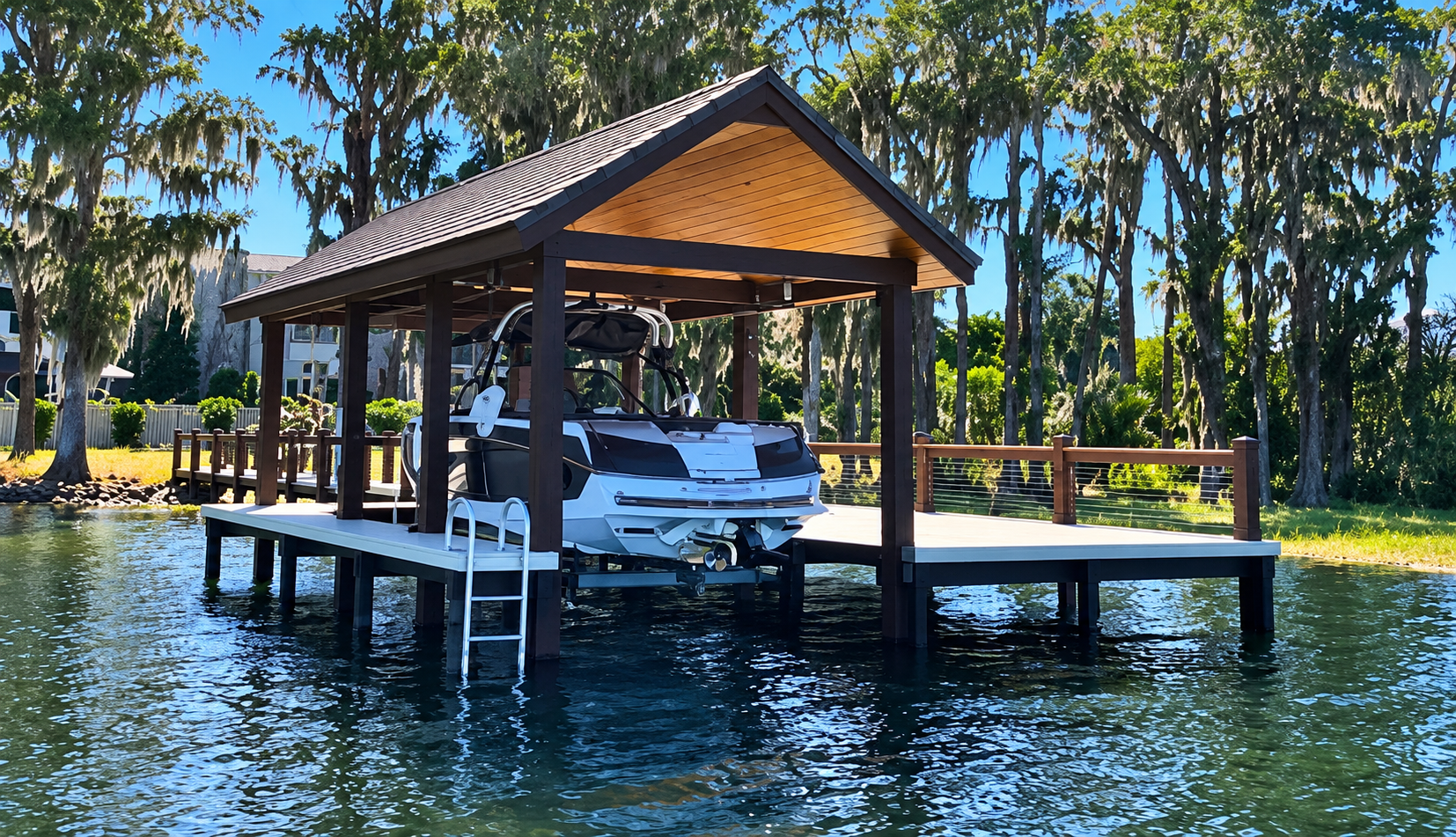
The structural preparation is about reducing the load on the dock. If the dock has a roof or a covered section, the roof adds wind load, and the preparation is about ensuring the roof is sound before the storm. A roof that has loose framing or corroded connections is a roof that is more likely to fail in the wind, and the pre-storm check is the time to find that out. The structural preparation is not about adding bracing the day before the storm, it is about knowing the condition of the dock before the storm is on the way.
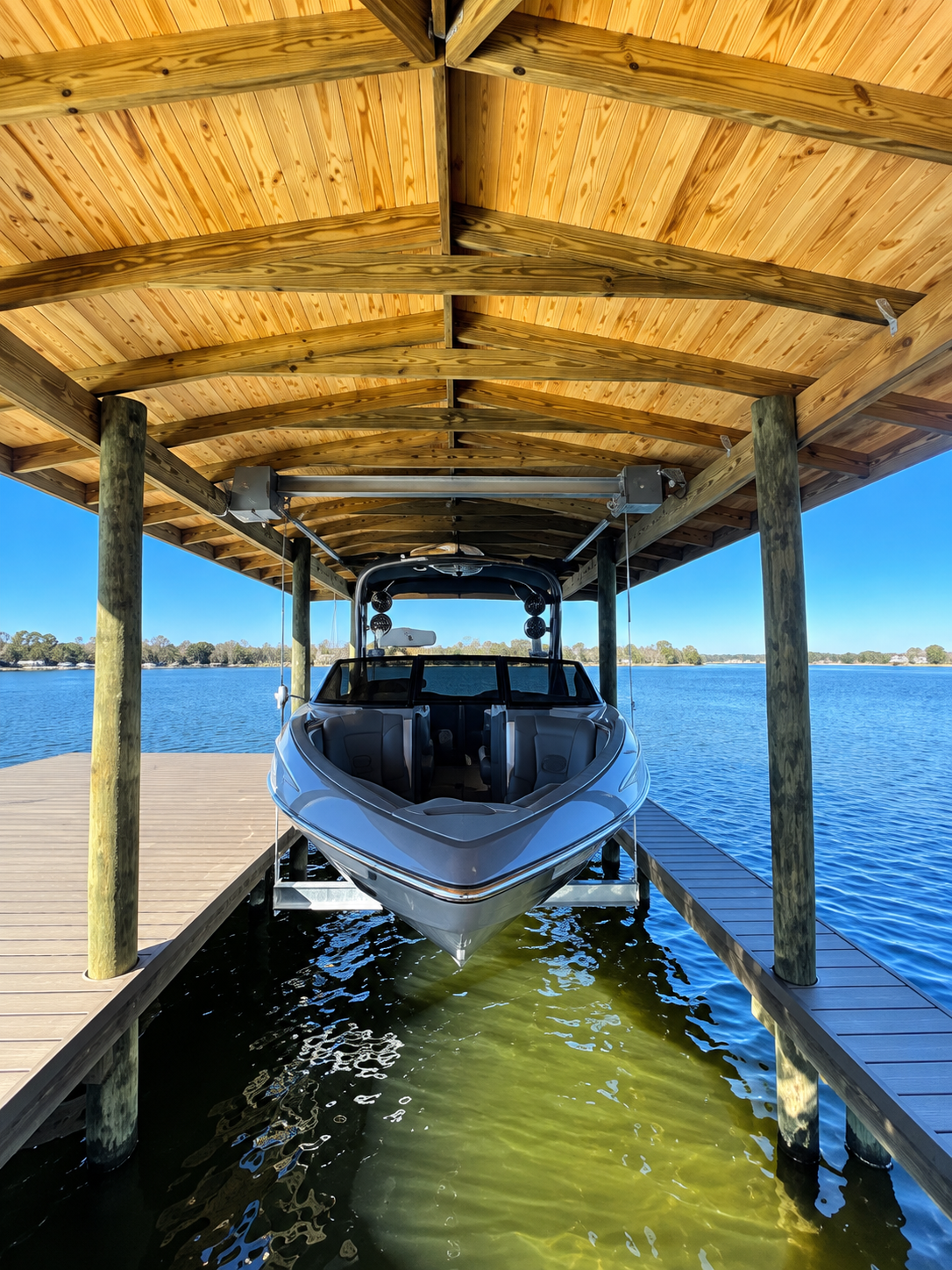
The boat lift is a specific preparation. A lift that is left in the lowered position is a lift that is in the water, and the storm surge can move it. A lift that is raised is a lift that is above the water, and the preparation is about getting it up and secured. The lift's canopy, if it has one, should be secured or removed, because a canopy catches the wind and can tear the lift loose if it is not secured. The lift is an accessory that is directly exposed to the storm, and it is a part of the preparation that matters.
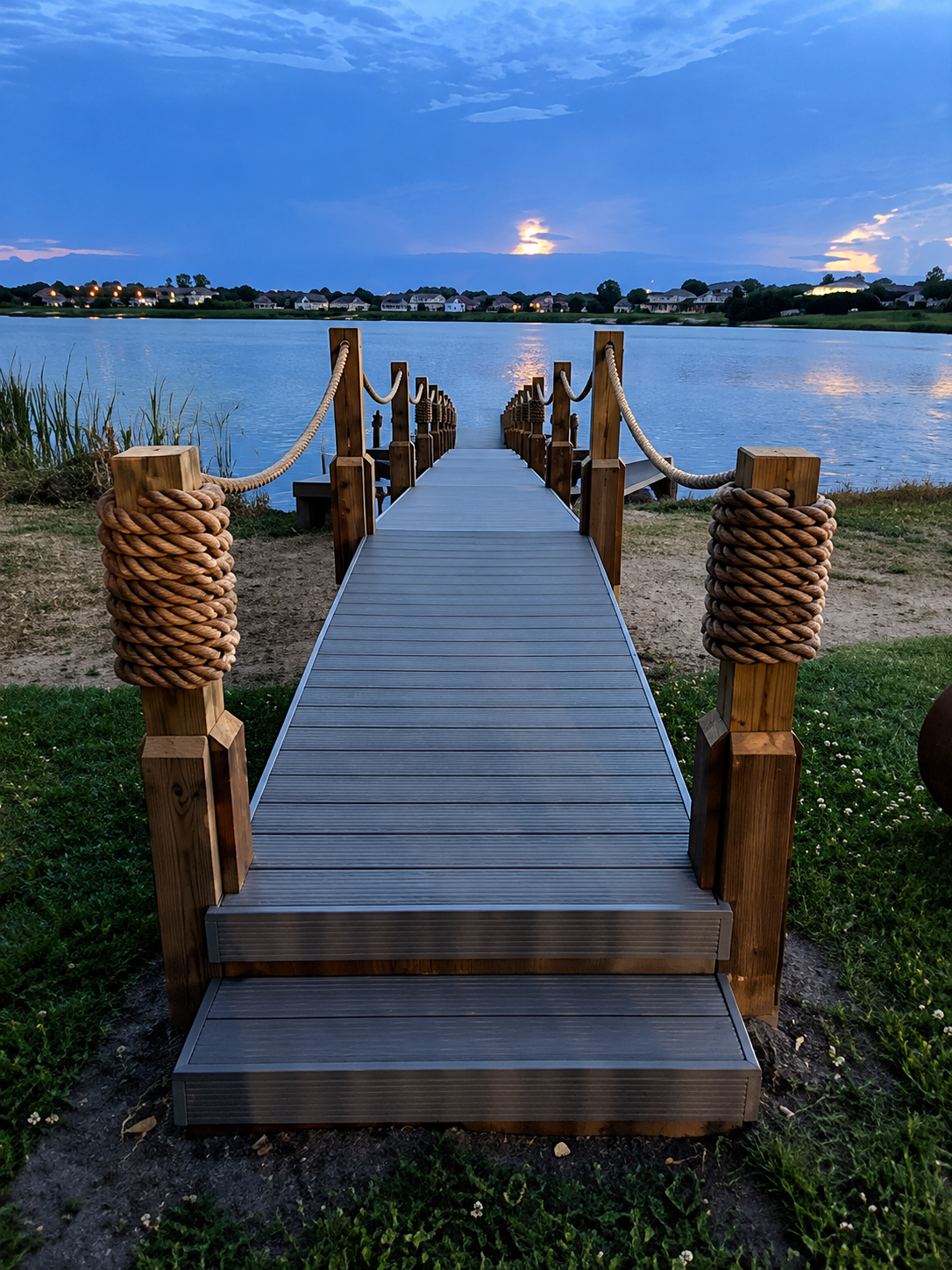
The accessories are the last preparation. The railings, the lighting, the boarding ladder, and any other attached accessories should be checked for security. A railing that is already loose is a railing that will fail in the storm, and the pre-storm check is the time to know that. The lighting should be secured or removed if it is portable. The accessories are the parts of the dock that are most exposed, and they are the parts that most need the pre-storm attention.
The water level is the consideration that is easy to forget. A storm brings surge, which is a rise in the water level, and the dock that is built for normal water level can be submerged by the surge. The preparation is about knowing what the surge can do to the dock, and it is about securing the items that the surge can move. A dock that is low to the water is more vulnerable to the surge, and the preparation is about knowing the exposure.
The preparation is also about the records. Before the storm, take photos of the dock, the lift, and the accessories, in the condition they are in. The photos are the record of the pre-storm condition, and they are the documentation that the post-storm insurance or repair conversation depends on. The preparation is not just about the physical securing, it is about the records that make the recovery possible.
The post-storm plan is the other half of the preparation. Know who to call for the assessment, know what the insurance requires, and know what the first steps are if the dock is damaged. A dock that is damaged in a storm is a dock that needs an assessment before it is used, because the damage that is visible is not always the damage that matters. The post-storm plan is the way to turn the storm into a repair, not a failure.
The way to prepare is to walk the dock with the storm in mind, a few days before the storm is on the way. Secure the boat, remove or tie down the loose items, raise and secure the lift, check the accessories, and take the photos. The preparation is the few hours that save the season of repairs, and it is the preparation that the Florida waterfront requires. The storm is not a surprise, it is a season, and the preparation is the way to meet it.
Ready to talk about your waterfront? We assess your shoreline, your watercraft, and how you use the water, then give you an honest, accurate estimate — no obligation.
Frequently Asked Questions
- What should I do with my boat before a hurricane?
- If the boat can be moved to a safer location, a marina with storm protection or a haul-out facility, that is the safest option. If it stays on the lift, secure it with extra lines and raise the lift to its highest position to keep the boat above the surge.
- How do I prepare my dock for a storm?
- Walk the dock and secure or remove anything that can become a projectile, loose furniture, cushions, and accessories. Check the roof or covered section for sound framing and connections. Secure or remove the lift canopy. Take photos of the dock's pre-storm condition for documentation.
- What should I do with my boat lift before a storm?
- Raise the lift to its highest position to get it above the storm surge, and secure it. If the lift has a canopy, secure or remove it, because a canopy catches the wind and can tear the lift loose if it is not secured. A lift left in the lowered position is in the water and vulnerable to the surge.
- Should I take photos of my dock before a storm?
- Yes. Photos of the dock, the lift, and the accessories in their pre-storm condition are the record that the post-storm insurance or repair conversation depends on. The preparation is not just the physical securing, it is the records that make the recovery possible.
- What is the biggest storm risk to a dock?
- The two main risks are wind load, which stresses the structure and the roof, and storm surge, which raises the water level and can move a low dock or a lowered lift. The preparation is about reducing both, securing the loose items the wind can use and raising the lift above the surge.