A boat lift is the accessory that changes a dock from a place to tie up to a place to store a boat out of the water, and the sizing of the lift is the decision that determines whether it works or not. A lift that is too small for the boat is a lift that is dangerous and that will fail, and a lift that is too large is wasted capacity and wasted money. Sizing a boat lift to the watercraft and the water depth is the first and most important decision in a lift installation, and it is the one that the safety and the utility of the lift depend on.
The boat is the starting point for the sizing. The weight of the boat is the number that determines the lift capacity, and the length and beam of the boat determine the cradle size and the dock layout. A boat that is heavier than the lift's rating will overload the lift and create a failure risk, and a boat that is larger than the cradle will not sit safely on the lift. The weight and the dimensions of the boat are the first numbers a builder needs to size the lift, and they are the numbers that should be confirmed before the lift is chosen.
The water depth is the other number that determines the lift. A lift that is in water too shallow for the boat will not lift the boat clear of the water, and a lift that is in water too deep may need a taller frame and a longer walkway. The depth at the end of the dock, at normal water level, is the number that tells a builder what the lift can be, and it is the number that should be checked before the lift is installed. A builder can measure the depth during a site assessment, and the measurement is what makes the sizing accurate.
The lift capacity is the rating that the lift is built to, and it is the number that has to match the boat. A lift is rated for a maximum weight, and the boat's weight, full of fuel and gear, should be within the lift's capacity with a margin for safety. A lift that is rated for the boat's dry weight may be overloaded when the boat is loaded, and the sizing should account for the loaded weight, not just the dry weight. The capacity is the number that the safety of the lift depends on.
The cradle is the part of the lift that holds the boat, and its size and layout have to match the boat's hull. A boat with a deep V-hull needs a cradle that supports the keel, and a boat with a flat bottom needs a cradle that supports the width. The cradle has to fit the boat, and the fit is what keeps the boat stable on the lift. The cradle is the part of the lift that most directly interacts with the boat, and it is the part that the sizing has to get right.
The dock layout is the other consideration, and it is the one that the lift installation affects. A lift takes up space on the dock, and the layout has to accommodate it without blocking the boarding area or the walkway. A lift that is too large for the dock will crowd the usable space, and a lift that is in the wrong place will interfere with the boat's access. The layout is the part of the sizing that is about the dock, not just the lift, and it is the part that the usability of the dock depends on.
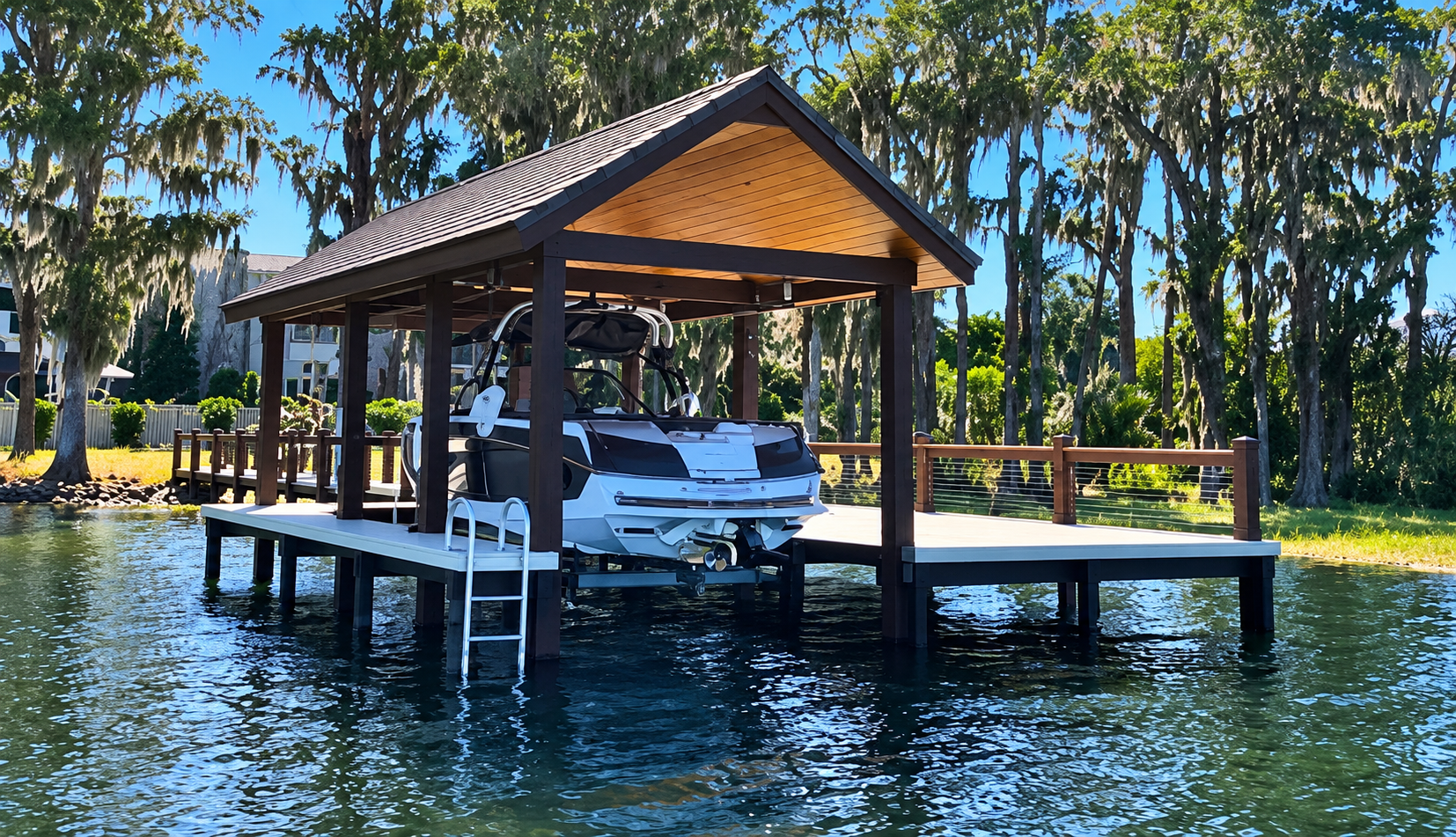
The lift type is the other decision, and it is the one that depends on the water and the dock. A cantilever lift, with arms that swing the boat out over the water, is a common choice for deeper water and for docks with a clear area beside them. A vertical lift, with a cradle that lifts straight up, is a choice for shallower water or for docks where the swing is blocked. A floating lift, which rides on the water and is connected to the dock, is a choice for water that fluctuates or for a lighter-touch installation. Each type suits a different condition, and the water and the dock are what determine the right type.
The power source is the other consideration. Most boat lifts are electric, and the dock needs power for the lift. The power can be from the shore, with wiring to the dock, or from a solar panel on the lift itself. The choice is about the dock's electrical and the available power, and it is a decision that should be made with the lift installation in mind. A lift without power is a lift that does not work, and the power is the part of the installation that has to be planned.
The installation is the project that puts the lift in place, and it is the one that the sizing and the type and the power all come together in. A lift that is sized correctly, installed in the right type for the water, and powered appropriately is a lift that works. A lift that is undersized, installed in the wrong type, or without power is a lift that does not. The installation is the project that the usability of the lift depends on, and it is the one that a builder who knows the waterway can handle.
The way to size a boat lift is to start with the boat, the water, and the dock. The weight and dimensions of the boat set the capacity and the cradle. The water depth sets the lift type and the frame. The dock sets the layout and the power. A builder who installs lifts on Central Florida waterways can help you put these together into a lift that fits, and the result is a lift that works for the boat you have and the water you are on. The sizing is the decision that the whole installation depends on, and it is the one that should be made with the right information.
Ready to talk about your waterfront? We assess your shoreline, your watercraft, and how you use the water, then give you an honest, accurate estimate — no obligation.
Frequently Asked Questions
- How do I know what size boat lift I need?
- The size is set by the boat's weight and dimensions, and the water depth at your dock. The lift's capacity should match the boat's loaded weight with a margin for safety, and the cradle should fit the boat's hull. The water depth determines the lift type and frame height. A builder can measure the depth and confirm the sizing during a site assessment.
- Should I size a boat lift for the boat's dry weight or loaded weight?
- Loaded weight. A lift rated for the boat's dry weight may be overloaded when the boat is full of fuel and gear. The lift should be sized for the loaded weight with a margin, because the capacity is the number that the safety of the lift depends on.
- What types of boat lifts are there?
- The main types are cantilever, vertical, and floating. A cantilever lift swings the boat out over the water and suits deeper water or docks with clear space beside them. A vertical lift lifts straight up and suits shallower water or docks where the swing is blocked. A floating lift rides on the water and suits water that fluctuates. The water and the dock determine the right type.
- Does a boat lift need power?
- Most boat lifts are electric and need a power source, either from the shore with wiring to the dock or from a solar panel on the lift. The power is part of the installation and should be planned with the lift, because a lift without power is a lift that does not work.
- How does water depth affect boat lift installation?
- Depth at the end of the dock, at normal water level, tells a builder what the lift can be. Shallow water may not lift the boat clear, and deep water may need a taller frame and a longer walkway. The depth is the number that determines the lift type and the frame height, and it should be checked before the lift is installed.