Not every dock works on every shoreline, and the first real decision in a new project is matching the dock type to the water it sits in. A dock that fits a shallow, sheltered canal is not the same as one that reaches across an open lake shoreline, and the difference shows up in cost, maintenance, and how the dock feels to use. Before you pick a style from a photograph, it helps to understand what the water and the shoreline are asking for.
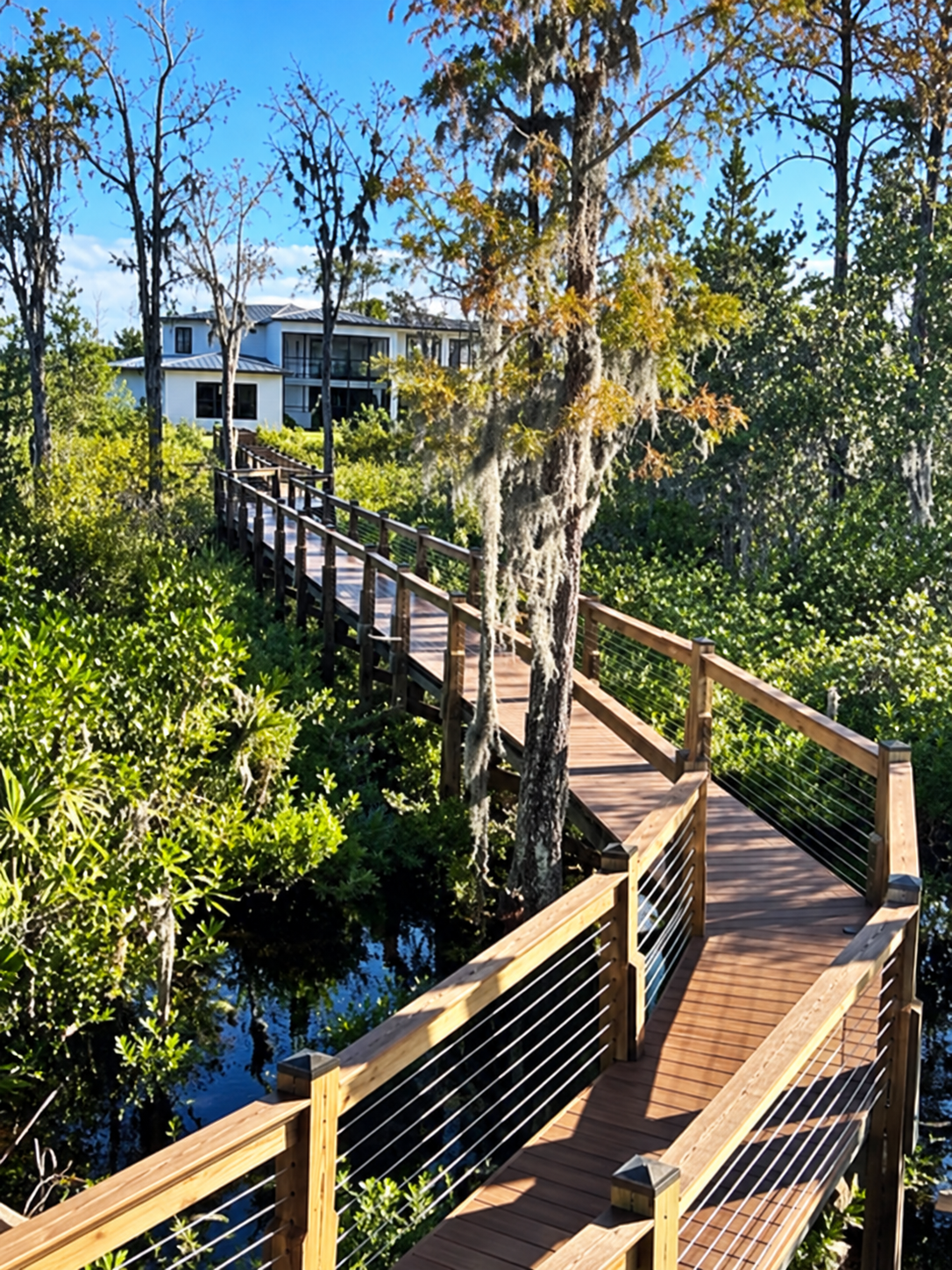
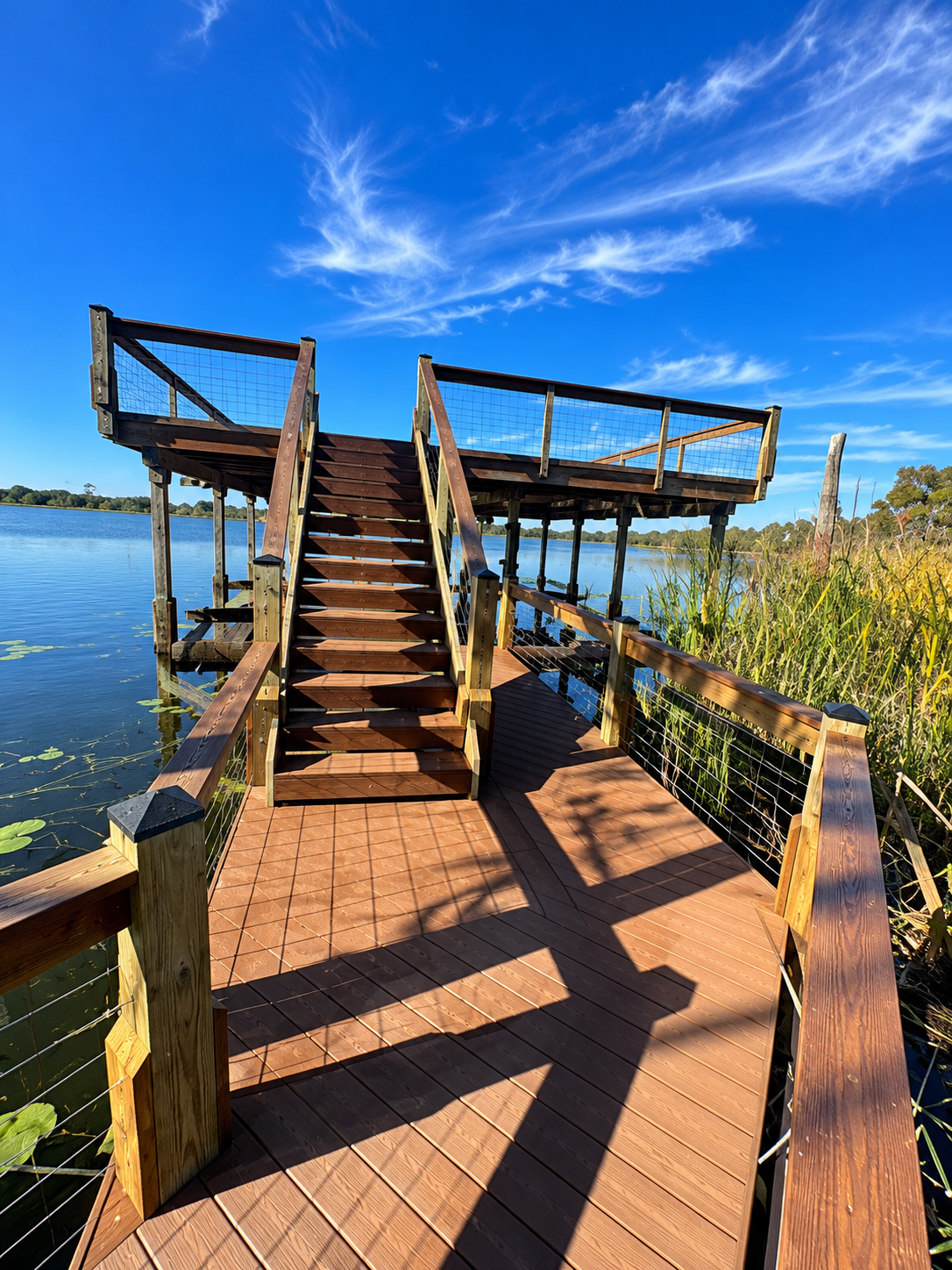
The fixed dock is the most familiar type on Central Florida lakes. Pilings driven into the lakebed carry a framed deck that sits at a set height above the water. A fixed dock is stable, predictable, and easy to build around, which is why it is the default for residential waterfronts with firm bottom conditions. It works well when the water depth is reasonable, the bottom holds a piling, and the shoreline does not change dramatically through the year. For most homeowners, a fixed dock is the starting point, and the design questions are about width, length, and layout rather than type.
A floating dock trades fixed pilings for a platform that rises and falls with the water. That sounds appealing on a lake with big seasonal level changes, but it comes with tradeoffs. A floating section is less stable underfoot than a fixed deck, it needs an anchoring system that can handle wind and wave action, and the connection between a floating section and a fixed walkway is a wear point. Floating docks make sense where water levels move enough to make a fixed dock awkward, or where a lighter touch on the shoreline is preferred, but they are not a universal upgrade. They are a specific answer to a specific condition.
A covered dock is not really a separate type so much as a fixed dock with a roof, but the roof changes how the dock behaves. A roof adds shade, which keeps the decking cooler and protects seating and furniture, but it also adds wind load and height. On an open, wind-exposed shoreline, a roof has to be engineered for the lateral force it will catch in a storm. On a sheltered canal, the same roof is a smaller structural question. The covered-or-open decision is really about how you use the dock and what your shoreline can structurally support.
The shoreline itself shapes the choice as much as the water. A gradual bank that drops off evenly lets a shorter dock reach navigable depth, which keeps the walkway shorter and the cost lower. A steep bank or a shallow shelf can force a longer dock, and that changes both the budget and the permitting conversation. A shoreline with a seawall or riprap gives a builder a clean transition to work from, while a natural bank may need erosion protection as part of the project. Telling a builder what the bank looks like, with photos, is one of the fastest ways to narrow the type.
How you use the water narrows the type too. If the dock is mainly a boarding platform for a boat on a lift, an open fixed dock is usually the right answer, because the goal is a stable, low, clear path to the boat. If the dock is an extension of the yard, a place to sit and watch the sunset, a covered section or a wider deck with seating starts to make sense. A dock that has to serve fishing, swimming, and boarding at once may need a larger footprint and more layout thought, but the type is still likely fixed.
Water depth is the number that quietly rules the decision. The depth at the end of the proposed dock, at normal water level, tells a builder how far the dock has to reach and how tall the pilings need to be. Shallow water near the shore means a longer dock to reach a usable depth, and that length adds cost and wind exposure. Deep water close to shore means a shorter dock, but the pilings have to be taller and the framing has to carry more lateral load. There is no universally right depth, only the depth your shoreline offers.
Wind and exposure are the variables people forget until the first storm. A dock on an open lake sees more wind than one tucked into a canal, and that changes how much roof makes sense and how heavy the framing needs to be. A dock that is fine on a sheltered shoreline may need heavier engineering on an open one. Your builder can tell you what your waterway and orientation mean for the structure, which is why the type decision is not final until a site assessment happens.
The permitting conversation is tied to the type. A fixed dock that stays within setbacks and height limits is usually the most straightforward permit. A roof adds height, which can affect what an authority allows. A floating section may be treated differently from a fixed deck, depending on the waterway. The type you choose changes the permitting path, and a builder who knows your waterway can tell you what to expect before you commit.
The useful way to choose is to describe the dock you want to use, not the dock you want to look at. A builder takes that description, combines it with what the shoreline and the water depth offer, and gives you a type that fits. The right dock type is the one that matches your water, your shoreline, and your routine, not the one that looks best in a portfolio photo.
Ready to talk about your waterfront? We assess your shoreline, your watercraft, and how you use the water, then give you an honest, accurate estimate — no obligation.
Frequently Asked Questions
- What is the most common dock type for Central Florida lakes?
- A fixed dock, where pilings driven into the lakebed carry a framed deck at a set height. It is stable and predictable, and it works well on shorelines with firm bottom conditions and reasonable water depth.
- When does a floating dock make sense?
- A floating dock makes sense where water levels move enough to make a fixed dock awkward, or where a lighter touch on the shoreline is preferred. It is less stable underfoot and needs careful anchoring, so it is a specific answer, not a universal upgrade.
- Does a covered dock count as a different type?
- A covered dock is usually a fixed dock with a roof. The roof adds shade but also wind load and height, which changes the engineering and the permitting conversation, especially on open shorelines.
- How does water depth affect the dock type?
- Depth at the end of the proposed dock tells a builder how far the dock has to reach and how tall the pilings need to be. Shallow water near shore means a longer, costlier dock; deep water close to shore means shorter but taller pilings.
- How do I choose the right dock type for my property?
- Describe the dock you want to use, not just the one you want to look at. A builder combines that with your shoreline, water depth, and exposure to recommend a type that fits your water and your routine.