A dock that is too small is a daily frustration, and a dock that is too large is money spent on space you do not use. Sizing a dock is not about building the biggest platform the lot will allow, it is about matching the footprint to the boats, the people, and the routine the dock has to serve. The right size feels obvious once you use it, and the wrong size is the thing everyone notices first.
Start with the boat, because the boat is the most concrete constraint. The length and beam of the watercraft you keep on the lift or alongside the dock set the minimum boarding area. A dock that is too narrow to board the boat safely, or too short to walk past the bow without stepping off the edge, is a dock that is too small for the boat. The lift capacity is sized to the boat's weight, and the boarding area is sized to its beam. If you plan to keep a larger boat in the future, it is cheaper to size for it now than to rebuild later.
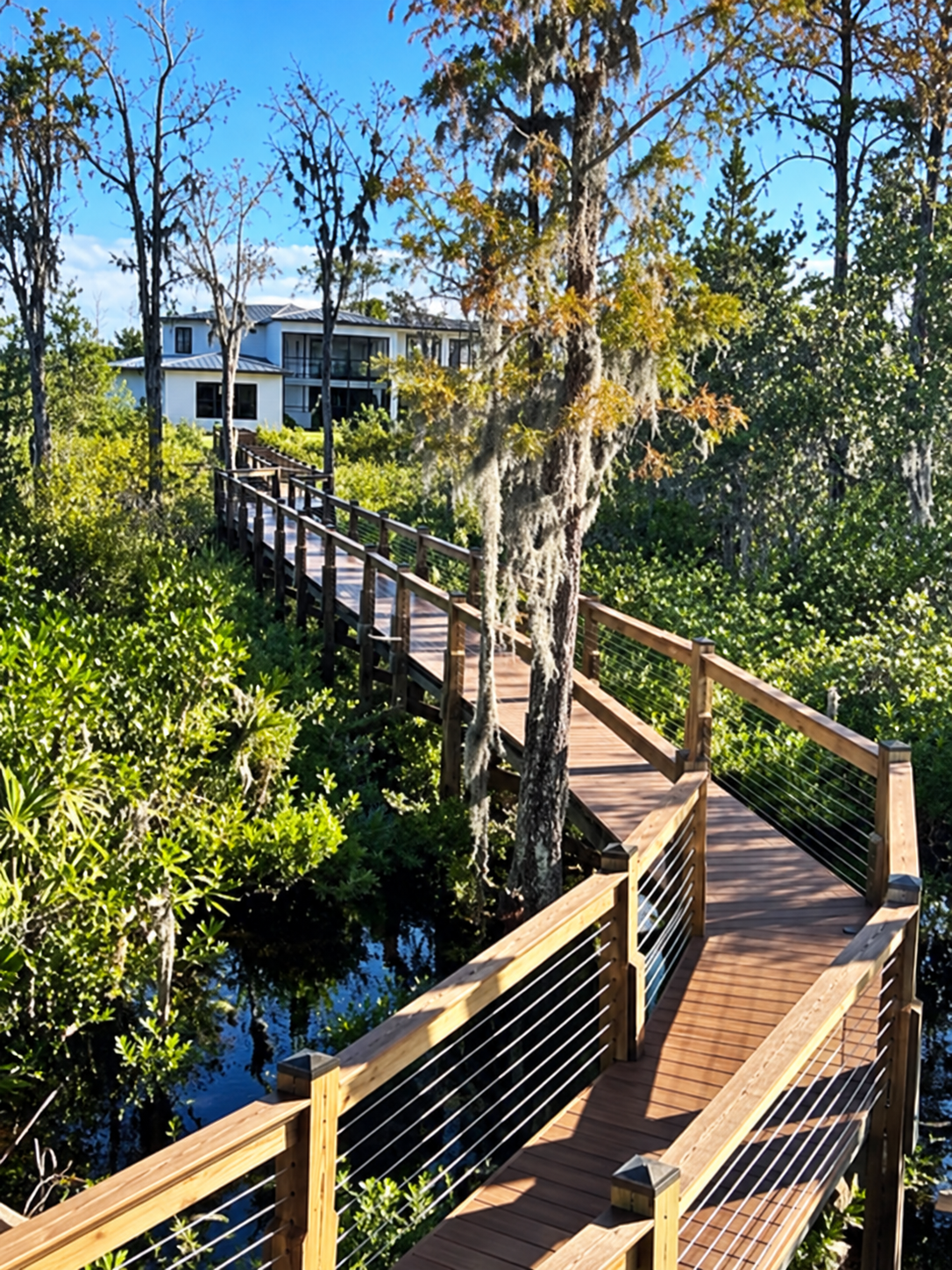
The walkway length is set by the water depth and the shoreline. A dock has to reach navigable water, which means the end of the dock has to be over water deep enough to float the boat at normal water level. On a shoreline that drops off quickly, the walkway can be short. On a shoreline that slopes gently, the walkway has to be longer to reach the same depth, and that length adds cost, wind exposure, and a longer walk from the house. The water depth at your shoreline is the number that sets the walkway length, not a style preference.
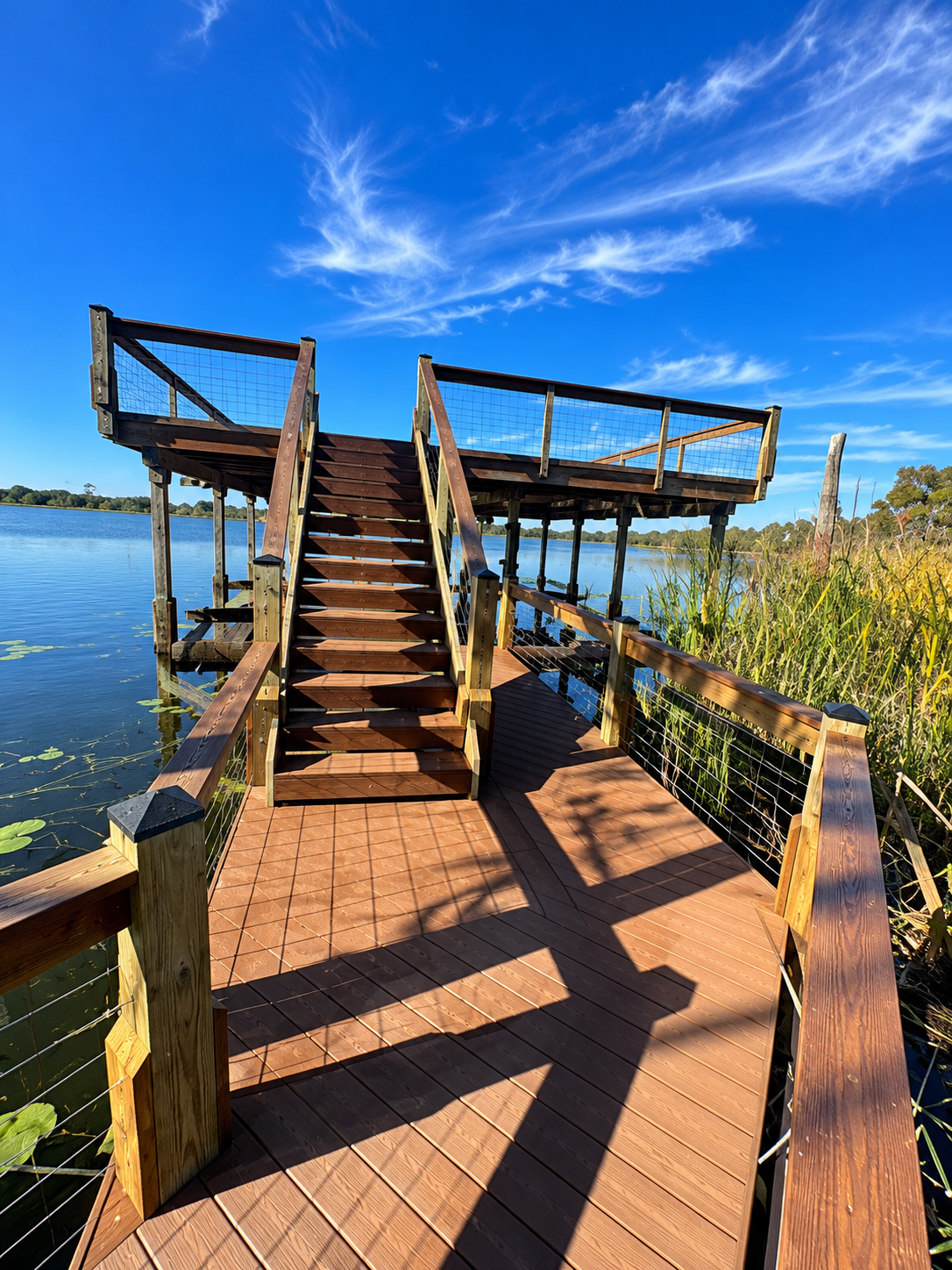
Width is the dimension people underthink. A boarding walkway that is just wide enough for one person feels cramped the moment you carry a cooler, a tackle box, and a child down it. A dock that will host seating, a lift, and a boarding area needs more width than a simple walkway. The standard residential walkway is wide enough for two people to pass comfortably, and a dock with seating or a lift usually needs more. The width is part of the layout, not an afterthought.
The load the dock carries is the structural side of sizing. A dock built for a boarding walkway and a light boat is framed for a lighter load than one built for a seating area, a grill, and a lift carrying a heavy boat. The pilings, the framing, and the bracing are all sized to the load. A dock that is sized correctly for the footprint but undersized for the load will feel bouncy underfoot, and that flex is the sign that the structure is not carrying what it was asked to.
The people who use the dock set the usable width. A dock used by a family with children who run on and off the boat wants more width than one used by a single angler. A dock that hosts guests wants a wider seating area and a clear boarding lane, because the worst layout is one where the seating blocks the path to the boat. The layout has to respect how people move between the lift, the seating, and the shore.
Seating and accessories add to the footprint. A bench, a storage box, rod holders, and a boarding ladder all take space, and a dock sized only for the boat will feel crowded once the accessories are on it. If you plan to add seating, lighting, or a covered section, the footprint has to leave room for them, or the dock becomes a collection of obstacles instead of a usable space.
The shoreline and the lot set the outer limits. Setbacks from the lot lines and from the water, homeowners association rules, and permitting limits all cap how wide and how long a dock can be. A dock that fits the boat and the routine but exceeds a setback has to be scaled back, and it is better to know that before construction than after. The permitting conversation is part of the sizing conversation, not a separate one.
Wind and exposure affect the right size too, in a less obvious way. A larger dock catches more wind, which means more lateral load on the pilings and the bracing. A dock on an open, wind-exposed shoreline may need heavier engineering for the same footprint than one on a sheltered canal. The size and the exposure together determine the structure, which is why a builder sizes the dock to the shoreline and not just to the boat.
The useful way to size a dock is to walk through a typical day on it. Where do you board the boat? Where do you set the cooler? Where do the kids sit? Where does the lift go? That walkthrough, combined with the water depth and the shoreline, tells a builder the footprint that fits. The right size is the one that serves the routine without wasted space, not the one that fills the lot.
Ready to talk about your waterfront? We assess your shoreline, your watercraft, and how you use the water, then give you an honest, accurate estimate — no obligation.
Frequently Asked Questions
- How wide should a residential dock be?
- A boarding walkway is usually wide enough for two people to pass comfortably, and a dock with seating or a boat lift usually needs more width. The layout has to respect how people move between the lift, the seating, and the shore.
- What sets the length of the dock?
- Water depth and shoreline set the walkway length. The end of the dock has to reach navigable water, so a shoreline that slopes gently needs a longer walkway than one that drops off quickly. Depth, not style, sets the length.
- Should I size my dock for a larger future boat?
- If you plan to keep a larger boat in the future, it is usually cheaper to size the boarding area and the lift capacity for it now than to rebuild later. The lift is sized to the boat's weight and the boarding area to its beam.
- Why does my dock feel bouncy underfoot?
- A dock that flexes underfoot is often undersized for the load it carries. The pilings, framing, and bracing are sized to the load. A dock sized for a boarding walkway will feel bouncy if you add seating and a heavy lift.
- Do setbacks limit how big my dock can be?
- Yes. Setbacks from lot lines and the water, homeowners association rules, and permitting limits cap how wide and long a dock can be. The permitting conversation is part of the sizing conversation, not a separate one.